
- Itinerary high point
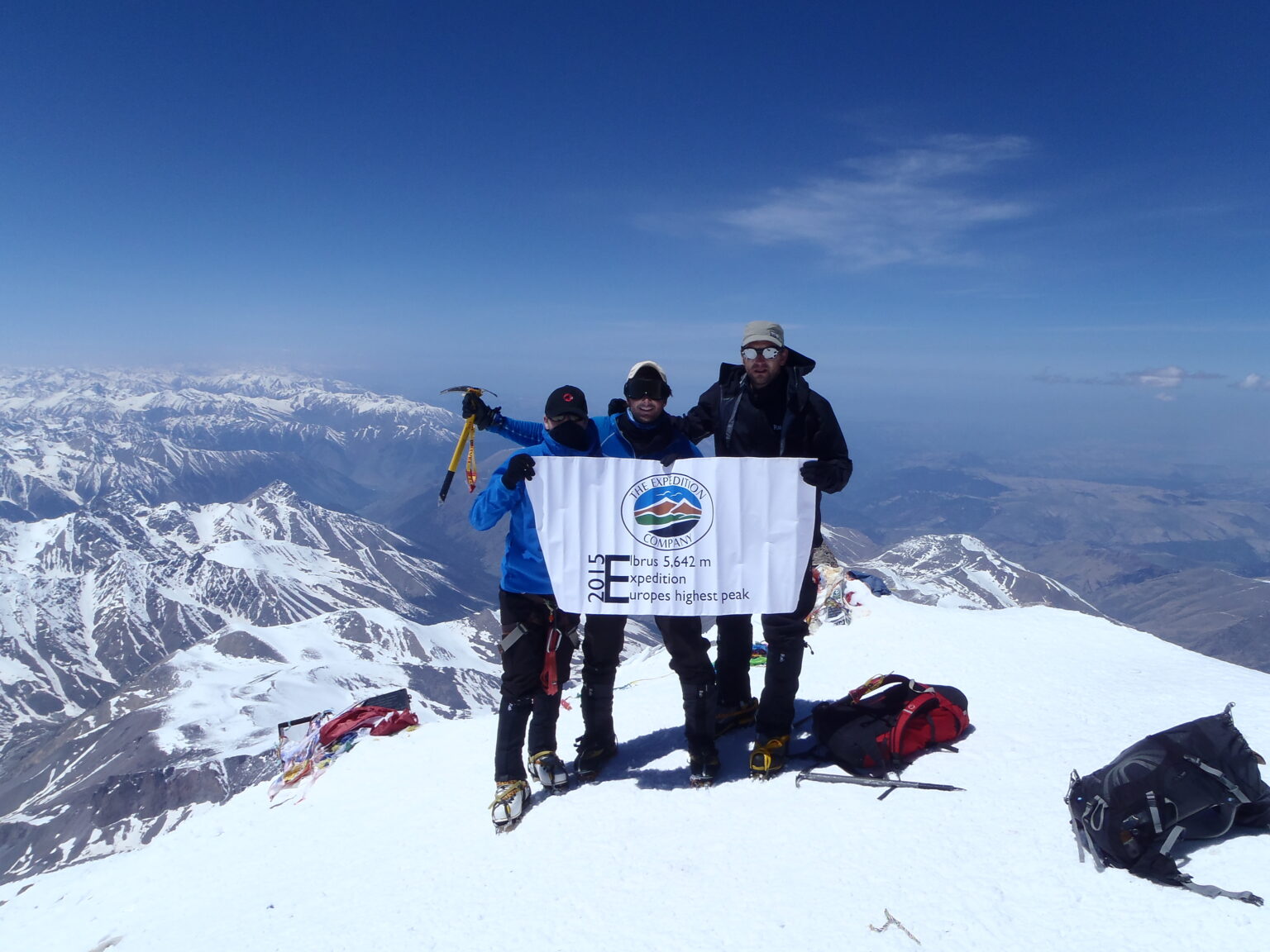
- 5,642 m Elbrus western summit.
The Caucasus · Seven Summits · Volcanic Seven Summits
Elbrus, through our experience
Europe’s highest mountain, a vast snow-covered volcano and a shared objective of the Seven Summits and Volcanic Seven Summits. Elbrus has long been part of our expedition experience.
We have led teams on Elbrus and know the work behind a successful mountain programme: purposeful acclimatisation, confident movement on snow, sound summit-day decisions and the organisation that supports the climb.
The mountain objective
Two summits above the Caucasus
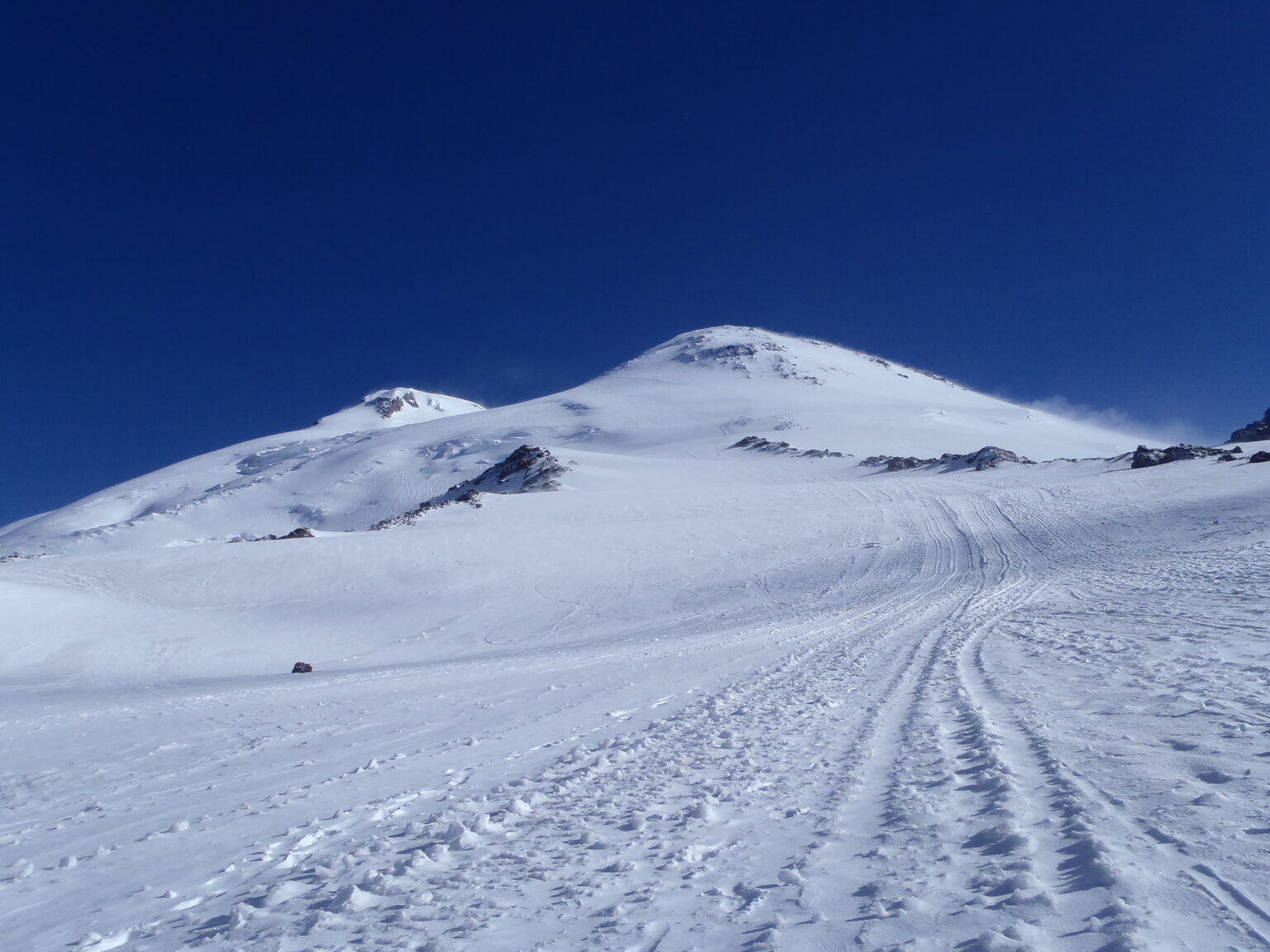
Elbrus rises to 5,642m at its western summit. Its broad snow slopes and high ridges place the surrounding Caucasus beneath you, with a very different character from the steep rock peaks nearby.
The established southern approach combines valley-based acclimatisation with time higher on the mountain. Our previous programmes have used the Terskol area, mountain huts and acclimatisation walks towards the Pastukhov Rocks before the summit attempt.
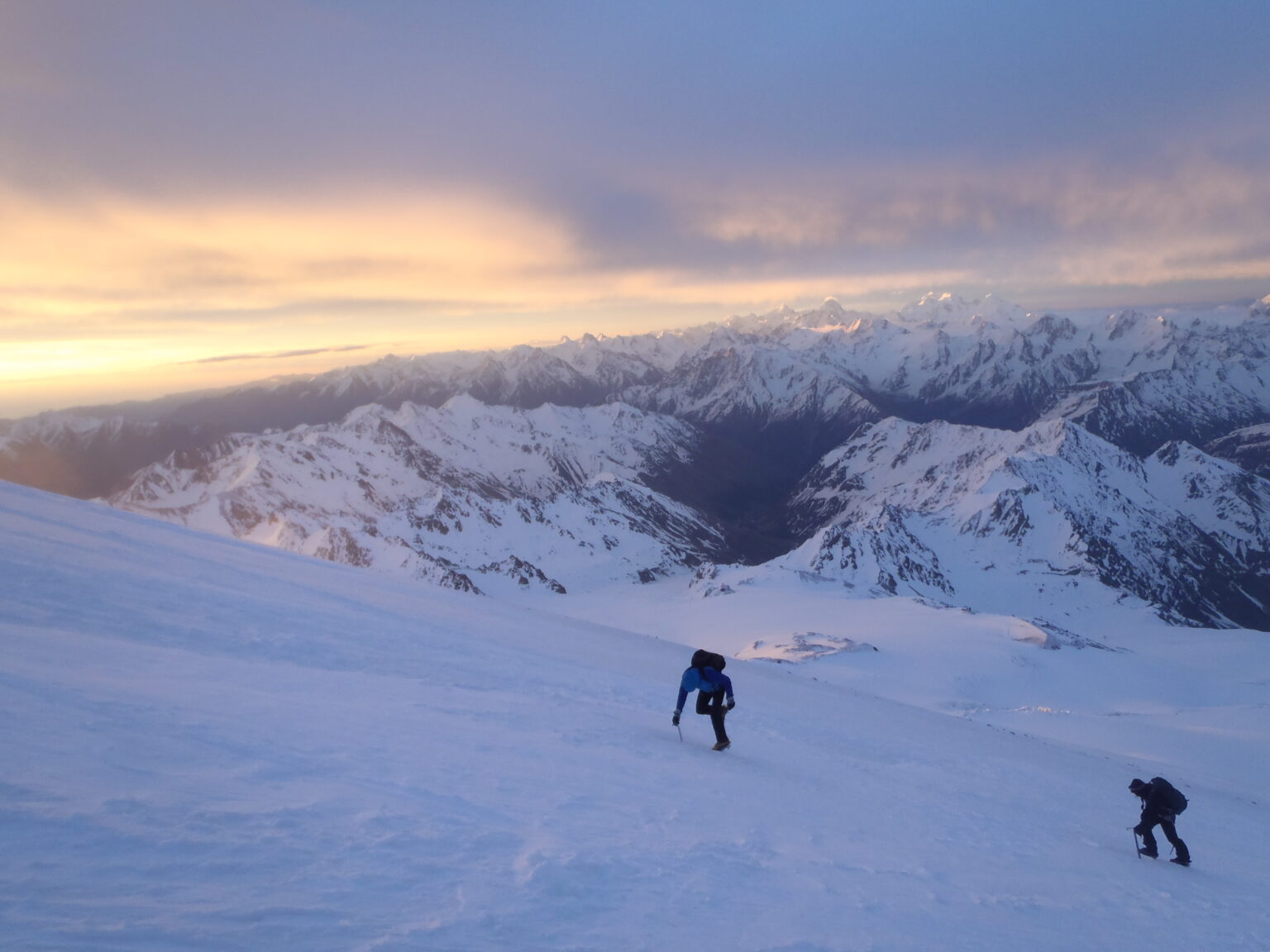
Good preparation matters here. Altitude, cold, wind and the length of the summit day demand efficient movement, a steady pace and enough reserves for the descent. We focus on those demands when helping climbers build towards the mountain.
Experience that informs the preparation
Build the skills behind the summit
Two mountains, one well-paced programme
Kazbek first, then Elbrus
The Kazbek–Elbrus combination has worked particularly well for our teams. Begin with a full Kazbek programme in Georgia, then take time to rest and recover before continuing to Elbrus.
Arriving rested, with acclimatisation built on Kazbek, can make the Elbrus stage considerably more efficient. In our experience, a suitable weather window can allow a much quicker ascent than a standalone Elbrus programme starting without that preparation.
We plan the sequence, recovery and transfer time together, keeping flexibility for the Elbrus weather window and the team’s condition. This combination remains a future option while our Elbrus departures are on hold.
Keep your wider mountain project moving
Elbrus belongs to both the Seven Summits and Volcanic Seven Summits. If you are working towards either collection, we can help you plan other stages and develop the experience you need for the remaining mountains.
Future Elbrus programmes will draw on our mountain experience and local connections, with routes and support tailored to your team when travel conditions allow a return.
Talk to us about your next mountain
Share your climbing background, the summits you are working towards and where you would value our support. We can discuss preparation, other expedition objectives and your longer-term Elbrus plans.